Green building has an image problem. It sounds like an expensive add-on: solar arrays, imported systems, certification fees, a premium you pay to feel good.
In practice, most of the performance comes from decisions made at design stage that cost nothing extra, and the equipment is what you buy afterwards to cover what the design failed to do.
The free decisions
Which way the building faces
In equatorial Kenya the sun is high and moves across the north and south through the year, while east and west facades take low, direct sun at the start and end of the day. That low sun is what makes a room unbearable at 5pm.
Putting the long faces of the building north and south, keeping large glazing off the west, and shading what glazing you do have costs nothing at design stage. It is close to impossible to fix afterwards without spending money on cooling.
Where the openings are
Cross ventilation needs openings on opposite sides of a space, and a path for air between them. A room with windows on one wall does not ventilate, it just has a view. Higher openings let hot air out where it collects.
Roof and ceiling
Most heat in a single-storey building arrives through the roof. Colour, insulation and a ventilated roof space between the covering and the ceiling do more for comfort than any appliance, at a fraction of the cost.
Where the rainwater goes
Kenya's rainfall is seasonal and intense. Every roof is a collection surface. The gutters, downpipes and tank position cost very little if designed in from the start, and reduce both your water bill and the drainage load around the building.
What is worth paying for
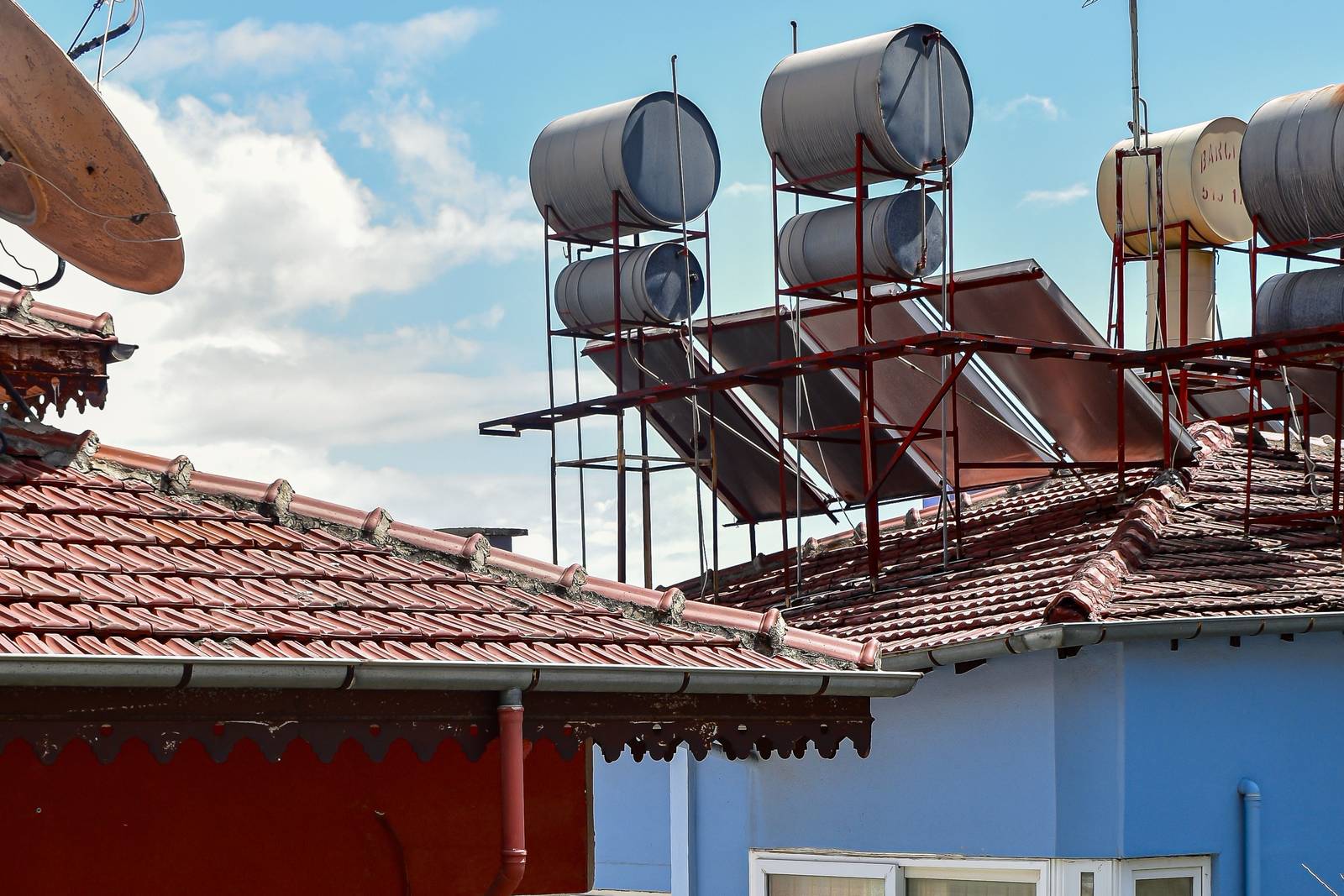
Solar water heating has the most straightforward case: hot water is a large share of household energy, and the equipment is well understood and locally serviceable.
Photovoltaics are worth designing for even if you do not install them immediately. Roof orientation and structure, conduit routes and a space for equipment cost almost nothing now and save a retrofit later.
Local materials are worth investigating on cost grounds alone. Stabilised soil blocks and locally quarried stone avoid the transport cost and the volatility of imported materials, though what makes sense varies by site and what is available nearby.
The argument that actually persuades people
Not carbon. Running cost.
A building that stays comfortable without air conditioning, collects its own water, heats it with sunlight, and does not need repainting every three years costs less to own. Over the life of a building that difference is large, and it belongs to whoever holds the building, which is usually the person who paid for it.
Make the case financially and the environmental result comes along for free.
Planning a build? Talk to us about designing it to cost less to run.