People usually call about a structural audit for one of four reasons. Cracks have appeared. They want to add a floor. They are buying the building. Or a previous owner removed something and nobody knows whether it mattered.
Here is roughly what the assessment covers, and what the findings mean.
Cracks: not all equal
The useful questions about a crack are where it is, which way it runs, how wide it is, and whether it is still moving.
Fine hairline cracking in plaster is usually shrinkage and cosmetic. Diagonal cracks running through structural walls, particularly ones that widen toward the top or bottom, suggest differential settlement, meaning parts of the building are moving relative to each other. Cracks that follow the line of a beam or column, or that appear at the same position on several floors, are worth taking seriously immediately.
Whether a crack is still moving matters more than how wide it is. A wide crack that stopped moving ten years ago is a different problem from a narrow one that opened last month.
Where the loads actually go
The assessment traces the load path: how weight travels from roof to slabs to beams to columns to foundations to ground. Buildings fail where that path has been interrupted.
The most common interruption is a wall that was removed during a renovation. In many buildings, particularly older or unsupervised ones, walls that look like partitions are carrying load. Removing one transfers that load somewhere it was not designed to go, and the building tells you about it slowly.
The second most common is a floor that was added. A structure designed for two storeys and carrying four is not necessarily failing today, but its margin is gone.
Condition of the concrete and steel
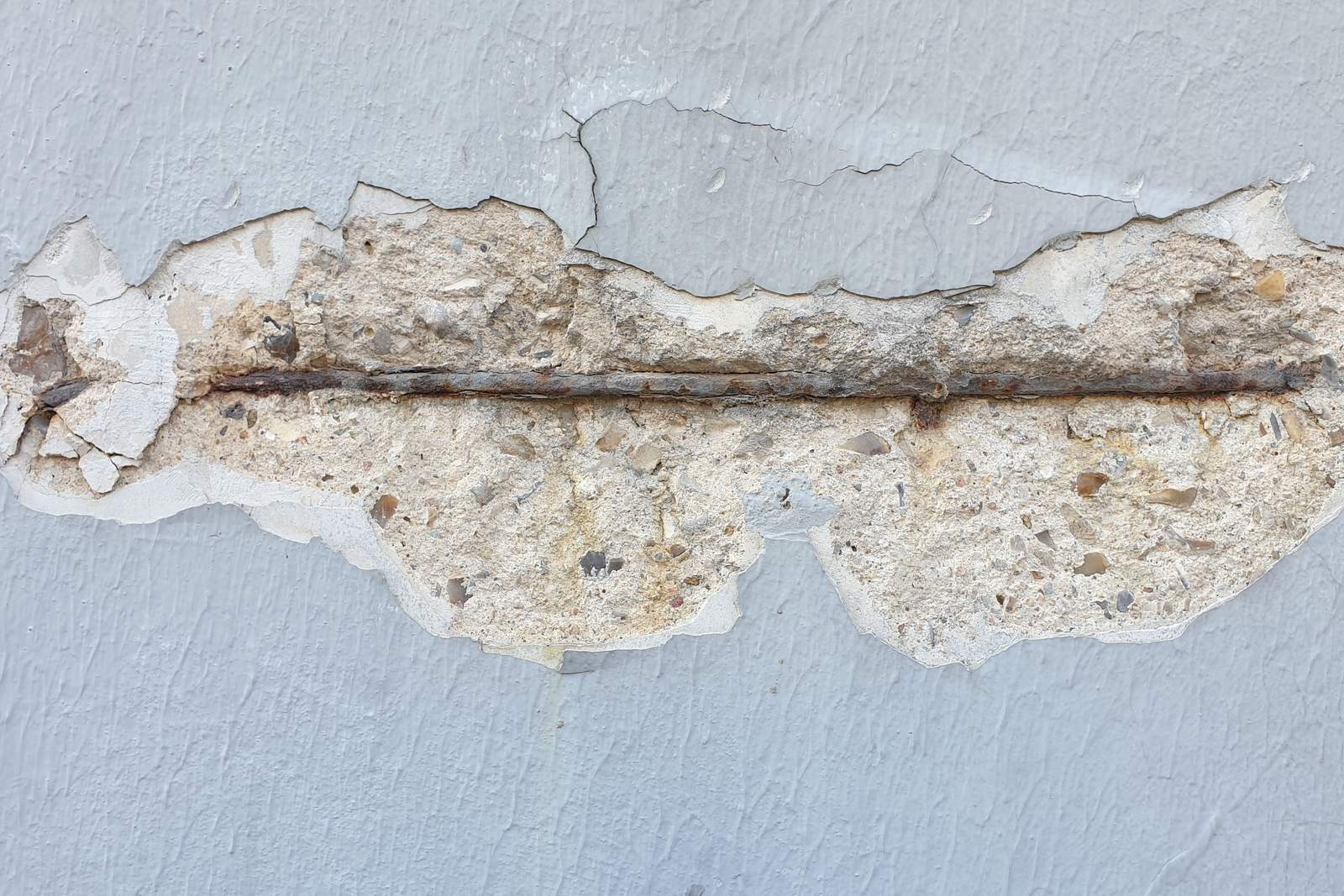
Reinforced concrete fails from the inside out. Water gets in, reaches the steel, the steel rusts, rust expands, and the expansion spalls the concrete off from within. By the time you can see rust stains and flaking on a soffit or column, the process has been running for a while.
The assessment looks at cover to reinforcement, signs of carbonation, spalling, and anywhere water has been sitting against structure for years: parapets, slab edges, balconies, planter boxes, and wet areas with failed waterproofing.
Water, again
Persistent damp is a structural issue, not a decorating issue. It corrodes reinforcement, degrades mortar, softens the ground under foundations, and it is almost always caused by something ordinary: a blocked downpipe, a failed roof detail, ground levels raised above the damp course, or drainage that sends water toward the building rather than away.
Reading the report
A useful audit report separates urgent from important from cosmetic, and says what happens if you do nothing. Findings should come with a prioritised schedule and indicative costs, because “the building has issues” is not actionable and “everything must be fixed immediately” is usually not true.
The honest outcome of many audits is that the building is fine, the cracks are cosmetic, and the report says so in two pages. That is a legitimate result and you should be suspicious of a consultant who never produces one.
Concerned about a building you own? Book an assessment.